Converting an IRA to a Roth after age 65 is legal at any age and any income, and the years from 65 to the RMD start at 73 or 75 are often retirement’s lowest-tax conversion window.
Key Takeaways
- There is no age limit and no income limit on a Roth conversion, so a 65-year-old can convert $10,000 or $400,000 in a single year.
- Direct Roth contributions phase out at $242,000 to $252,000 of MAGI for a married couple filing jointly in 2026 ($153,000 to $168,000 single), while conversions have no ceiling.
- In 2026 the 22% bracket for a married couple runs to $100,800 of taxable income and the 24% bracket to $403,550.
- The 2026 standard Medicare Part B premium is $202.90 per month, with IRMAA surcharges beginning above $109,000 (single) or $218,000 (joint) MAGI on a 2-year lookback.
- RMDs begin at age 73 for those born 1951 to 1959 and 75 for those born 1960 or later, so the earliest age-75 RMD year is 2035.
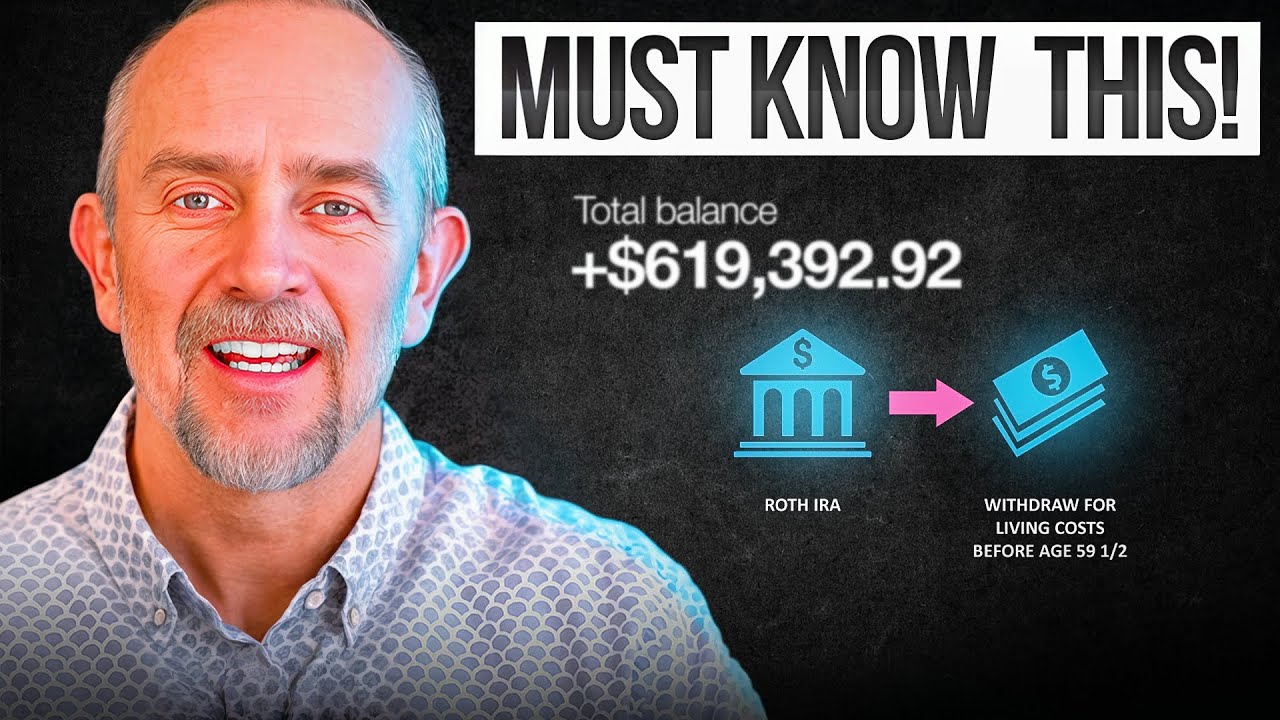
- The 10% early-withdrawal penalty on converted funds applies only before age 59 1/2, so a person over 65 can withdraw converted principal without penalty.
- For 2026 the federal estate tax exemption is $15,000,000 per person.
2026 Roth Conversion Figures at a Glance
Figures reflect the 2026 federal rules stated in this article.
Converting an IRA to a Roth after age 65 is permitted at any age and at any income level, and for many retirees the years between 65 and the start of required minimum distributions are the lowest-cost window to move money out of a traditional IRA. This guide covers the tax mechanics, the 2026 numbers, a worked dollar example, and a go or no go checklist built for a 65-year-old with a sizeable traditional IRA or 401k.
Converting an IRA to a Roth after age 65 is fully legal: the IRS sets no age limit and no income limit on conversions. The years from 65 to the start of required minimum distributions, at 73 or 75, are often the lowest-tax window of retirement, which is why many investors convert during this stretch to reduce lifetime taxes, protect a surviving spouse, and pass tax-free assets to heirs.
Can you convert an IRA to a Roth after age 65?
Yes. There is no age limit and no income limit on a Roth conversion. A conversion moves money from a traditional IRA or 401k into a Roth IRA, and you pay ordinary income tax on the converted amount in the year you convert. Unlike annual Roth contributions, conversions are uncapped, so a 65-year-old can convert $10,000 or $400,000 in a single year.
People often confuse the conversion rules with the Roth contribution rules. Direct Roth contributions phase out at $242,000 to $252,000 of modified adjusted gross income for a married couple filing jointly in 2026 ($153,000 to $168,000 single). A Roth conversion has no such ceiling, and higher earners routinely use conversions precisely because the front door is closed to them.
Three rules govern every conversion regardless of age. It is taxable ordinary income in the year you convert. It is irreversible: the option to undo a conversion (recharacterization) was removed in 2018. And the deadline is December 31, not the April tax-filing date, so a 2026 conversion must be completed by December 31, 2026.
Why age 65 to 73 is the Roth conversion sweet spot
For most retirees, ages 65 to 73 form a low-income valley: wages have stopped, required minimum distributions have not yet started, and Social Security may still be deferred. That gap leaves room to convert traditional IRA dollars at the 22% or 24% bracket instead of the higher bracket forced later by RMDs. Delaying Social Security to age 70 widens the window further.
The logic is that a large traditional IRA is a deferred tax bill, not a settled asset. Every dollar you convert now at a known rate is a dollar that will not be taxed later at a rate you cannot predict. The 65 to 73 valley is often the only stretch where you control your taxable income closely enough to fill a bracket on purpose.
If you postpone Social Security to age 70 to earn the delayed-retirement credits, your taxable income between 65 and 70 can be low enough to convert aggressively before benefits and RMDs stack on top. This coordination is one reason many investors treat the Social Security claiming decision and the conversion plan as a single question.
How much tax will you pay converting an IRA to a Roth at 65?
The tax on a conversion equals the converted amount times your marginal bracket. The strategy most retirees use is to convert only enough to fill the current bracket to its top without spilling into the next one. In 2026 the 22% bracket runs to $100,800 of taxable income for a married couple, and the 24% bracket runs to $403,550, so the headroom between your baseline income and those ceilings is your conversion budget.
Consider a married couple, both 65, with a $900,000 traditional IRA and $70,000 of other income (a pension plus interest). Their 2026 standard deduction is $32,200 plus a $1,650 age-65 addition for each spouse, or $35,500 total, which brings taxable income near $34,500 before any conversion. The 2025 to 2028 bonus senior deduction of $6,000 per person age 65 and over (enacted under OBBBA, P.L.119-21) can lower that figure further, adding conversion headroom.
To reach the top of the 22% bracket ($100,800 taxable), this couple could convert roughly $66,000 and pay 22% on the converted amount, about $14,500 of federal tax. Deciding how much to convert to a Roth each year is the core planning question, because the right number balances today’s bracket against the RMD-driven bracket you expect later.
| 2026 marginal rate | Single, taxable income up to | Married filing jointly, taxable income up to |
|---|---|---|
| 22% | $50,400 | $100,800 |
| 24% | $201,775 | $403,550 |
| 32% | $256,225 (35% begins) | $512,450 (35% begins) |
Note how the single-filer ceilings are roughly half the joint ceilings. That compression matters for the widow’s trap discussed below, and it is a reason to convert while both spouses are alive and the wider joint brackets are still available.
How Roth conversions affect Medicare (IRMAA) and Social Security taxes
A conversion raises your modified adjusted gross income, which can trigger two side effects: higher Medicare premiums through IRMAA, and more of your Social Security becoming taxable. IRMAA uses a 2-year MAGI lookback, so a 2026 conversion affects 2028 premiums. The last conversion year that never touches a Medicare premium is age 62, because Part B starts at 65.
In 2026 the standard Medicare Part B premium is $202.90 per month. The Income-Related Monthly Adjustment Amount (IRMAA) adds a surcharge to Part B and Part D once MAGI exceeds $109,000 for a single filer or $218,000 for a couple filing jointly, and it climbs in tiers above those thresholds. Because of the 2-year lookback, a large one-time conversion can quietly raise premiums two years later.
| Filing status | 2024 MAGI (the 2026 lookback year) | 2026 Part B result |
|---|---|---|
| Single | At or below $109,000 | $202.90, no surcharge |
| Married filing jointly | At or below $218,000 | $202.90, no surcharge |
| Either status | Above the threshold | IRMAA surcharge added to Part B and Part D, rising in tiers |
Social Security is taxed on a separate track called provisional income. For a married couple, up to 50% of benefits become taxable above $32,000 of provisional income and up to 85% above $44,000. A conversion adds to provisional income, so timing conversions in years before you claim benefits often keeps more of the check tax-free. A conversion is not itself net investment income, but by lifting your MAGI it can push other investment income over the $250,000 joint threshold for the 3.8% net investment income tax.
The widow’s trap: the strongest reason to convert at 65
The widow’s trap, or survivor single-filer trap, is what happens when one spouse dies and the survivor files as a single taxpayer the following year. The single brackets are roughly half the joint brackets, and the IRMAA threshold drops from $218,000 to $109,000, so the same income is taxed harder overnight. Converting while both spouses are alive shrinks the traditional IRA that would otherwise trigger this jump.
Picture the couple from earlier with $90,000 of taxable income while both are alive. Jointly, that income sits comfortably inside the 22% bracket. If one spouse dies, the survivor keeps most of the household income but now files single, where the 22% bracket ends at $50,400. The same $90,000 pushes into the 24% bracket, and the survivor may cross the $109,000 single IRMAA line as well.
Because a large traditional IRA still generates RMDs for the surviving spouse, the pressure compounds year after year. Converting during the joint-filing years moves those dollars into a Roth, where withdrawals are tax-free and there are no lifetime RMDs, so the survivor inherits a smaller taxable base. This is the differentiator many households care about most, and it is a distinct angle from our companion guide on Roth conversions at age 75, which focuses on retirees who are already taking RMDs.
RMDs and the lifetime RMD drag on a large IRA
Required minimum distributions are forced annual withdrawals from a traditional IRA or 401k. The RMD age is 73 for those born 1951 to 1959 and 75 for those born 1960 or later, so the earliest age-75 RMD year is 2035. On a $1 million IRA that keeps growing, lifetime RMDs can total well over a million taxable dollars, and you cannot convert an RMD once it has started.
The drag is cumulative. Each RMD is taxed as ordinary income whether or not you need the cash, and the withdrawal can lift your Social Security taxation and Medicare premiums at the same time. A couple who does nothing between 65 and 73 may find their first RMDs land squarely in a higher bracket than the one they could have filled voluntarily years earlier.
Conversions before RMD age reduce the balance that RMDs are calculated from, which shrinks every future distribution. For the mechanics and the 2026 distribution factors, see our detailed explainer on required minimum distributions in 2026. Once RMDs begin, you must take the RMD first and can convert only amounts above it.
The 5-year rule after age 65
Two separate 5-year clocks exist, and only one matters after 65. The penalty version, which applies a 10% early-withdrawal penalty to converted funds touched within five years, is void once you are past age 59 1/2. The second clock governs tax-free earnings: your Roth account must be open at least five years before investment growth can be withdrawn tax-free, and this clock starts once per person, not once per conversion.
For a 65-year-old, the practical takeaway is that converted principal is always available without penalty, because the 10% penalty only applies before 59 1/2. What you want to satisfy is the earnings clock: fund your first Roth IRA at least five years before you plan to spend the earnings. Opening even a small Roth today starts that clock for all future conversions.
How to ladder conversions over multiple years
A conversion ladder means converting a measured amount each year rather than one lump sum. Spreading the conversion keeps each year’s income from spilling into a higher bracket or across an IRMAA threshold. A retiree with a $900,000 IRA might convert $60,000 to $90,000 a year across the 65-to-73 window instead of a single $500,000 conversion that would land in the 32% or 35% bracket.
Laddering also smooths the Medicare and Social Security side effects, because you can hold each year’s MAGI just under the surcharge and provisional-income lines. The trade-off is time: a multi-year ladder only works if you start early, which is why the 65-to-73 stretch is so valuable. A one-time conversion at 72 leaves no room to spread.
Leaving heirs a tax-free inheritance
A Roth IRA passes to heirs income-tax-free, which is a meaningful edge under the SECURE Act 10-year rule. Most adult children who inherit a traditional IRA must empty it within 10 years and pay ordinary income tax on every dollar, often during their peak earning years. An inherited Roth is also emptied within 10 years, but the withdrawals are tax-free, so your beneficiaries keep the full amount.
For 2026, the federal estate tax exemption is $15,000,000 per person, so most households are not exposed to estate tax, and the real inheritance question is income tax on the retirement account. By converting during your own low-bracket years, you effectively prepay your heirs’ tax at your rate rather than theirs, which is often lower than the rate a working child would face.
QCDs and delaying Social Security to widen the window
Two lesser-known levers pair with conversions. A qualified charitable distribution (QCD) lets you send up to a set annual limit directly from an IRA to charity starting at age 70 1/2, which satisfies part of an RMD without adding to taxable income. Delaying Social Security to age 70 keeps taxable income low in the interim, opening more conversion headroom in your early to mid 60s.
QCDs are available from an IRA only, not directly from a 401k, and they count against your RMD while staying off your tax return, which preserves conversion room in the same year. Charitably inclined retirees often combine modest conversions with QCDs so the RMD is partly satisfied by giving rather than by taxable withdrawal.
Delaying Social Security has a second benefit beyond the larger check: every year you postpone benefits is a year of artificially low income you can backfill with a conversion. The claiming decision and the conversion plan are two sides of the same lifetime-tax question.
A go or no go checklist for converting after 65
The core rule is a break-even comparison: convert when the tax rate you pay today is at or below the rate you expect to pay in the future. If RMDs, a surviving-spouse filing change, or rising statutory rates would push you higher later, converting now at a known rate often wins. If your future rate is clearly lower, waiting may be better.
Signals that often point toward converting after 65:
- You have a traditional IRA or 401k of roughly $750,000 to $1.2 million or more that will drive large RMDs at 73 or 75.
- Your current bracket is 22% or 24% and you have headroom before the next bracket or an IRMAA threshold.
- You are delaying Social Security to 70, creating low-income conversion years now.
- You want to protect a surviving spouse from the single-filer widow’s trap.
- You have cash outside the IRA to pay the conversion tax, so the full converted amount stays invested.
Signals that often point toward waiting or converting less: you expect a genuinely lower bracket in retirement, you would have to pay the conversion tax from the IRA itself, or a large conversion would spike your Medicare premiums with no offsetting benefit. Running the Roth conversion break-even math and confirming the 2026 conversion deadline before December 31 turns the decision from a guess into a number.
Work with Q3 Advisors
Q3 Advisors is a registered investment adviser focused on retirement tax planning. This page is educational and is not advice; consult a qualified professional.
Frequently asked questions
Is it worth converting to a Roth after 65?
Converting to a Roth after 65 is often worth it when your current tax rate is at or below the rate you expect once RMDs begin at 73 or 75, when you want to shield a surviving spouse from the single-filer widow’s trap, or when you plan to leave tax-free assets to heirs. It is less compelling if your future bracket will clearly be lower or you must pay the tax from the IRA itself.
At what age is it too late to do a Roth conversion?
There is no age at which a Roth conversion becomes illegal or impossible. The IRS sets no upper age limit, so you can convert at 65, 75, or 85. The only practical limit is that once required minimum distributions begin, you must take the RMD first and can convert only amounts above it. You cannot convert an RMD itself.
How much tax will I pay if I convert my IRA to a Roth?
You pay ordinary income tax on the converted amount at your marginal bracket for that year. In 2026, filling the 22% bracket for a married couple means staying under $100,800 of taxable income, and the 24% bracket runs to $403,550. Converting $66,000 at 22% costs roughly $14,500 in federal tax. State tax, IRMAA, and Social Security taxation can raise the effective cost.
Do you have to wait 5 years to withdraw from a Roth conversion after 59 1/2?
No, not for the penalty. The 5-year rule that adds a 10% penalty to converted funds only applies before age 59 1/2, so a person over 65 can withdraw converted principal at any time without penalty. A separate 5-year clock still governs tax-free withdrawal of earnings, requiring your Roth account to have been open at least five years.
Can I convert my IRA to a Roth after RMDs have started?
Yes. You can convert after RMDs begin at 73 or 75, but you must take your full required minimum distribution first, because an RMD cannot be converted. Any amount above the RMD can then be converted and taxed as ordinary income. Many retirees who missed the pre-RMD window still convert to reduce future RMDs and protect a surviving spouse.